pyrolysis line
?What is pyrolysis
Pyrolysis is a thermal decomposition process in which organic materials are broken down into simpler compounds in the absence or near absence of oxygen. The process takes place at controlled high temperatures, typically between 300°C and 1,000°C. Its primary purpose is to convert materials that cannot be mechanically recycled into valuable products such as pyrolysis char, pyrolysis oil, and combustible gases.
Pyrolysis is a thermal decomposition process in which organic materials are broken down into simpler compounds in the absence or near absence of oxygen. The process takes place at controlled high temperatures, typically between 300°C and 1,000°C. Its primary purpose is to convert materials that cannot be mechanically recycled into valuable products such as pyrolysis char, pyrolysis oil, and combustible gases.
The main pyrolysis reactions occur through several stages. During the initial thermal decomposition stage, heat causes large molecular chains to break down, generating highly reactive free radicals. For example, when cellulose is heated, its molecular structure undergoes thermal decomposition, producing a range of volatile compounds, gases, and solid carbonaceous residue.
During chain scission, carbon–carbon (C–C) and carbon–hydrogen (C–H) bonds are broken, resulting in the formation of smaller molecules such as alkanes, including methane (CH₄), and alkenes, such as ethylene (C₂H₄). These simpler compounds can be used as fuels or as feedstocks for chemical processes.
The next stage involves radical formation and molecular rearrangement. The free radicals generated during thermal decomposition initiate a series of reactions that lead to the formation of more stable molecules and light gases such as hydrogen (H₂), methane (CH₄), carbon monoxide (CO), and carbon dioxide (CO₂). Some of these gases, particularly hydrogen and methane, can be recovered and used as fuel.
The next stage involves radical formation and molecular rearrangement. The free radicals generated during thermal decomposition initiate a series of reactions that lead to the formation of more stable molecules and light gases such as hydrogen (H₂), methane (CH₄), carbon monoxide (CO), and carbon dioxide (CO₂). Some of these gases, particularly hydrogen and methane, can be recovered and used as fuel.
?What are the feedstocks for pyrolysis

Biomass
Including wood, sawdust, rice husks, sugarcane bagasse, algae, and other plant-based materials
Plastics
Various types, including polyethylene (PE), polypropylene (PP), polystyrene (PS), polyvinyl chloride (PVC), and more

Tires
Especially used tires that can be recycled

Municipal and industrial waste
Containing organic compounds suitable for pyrolysis

Crude oil and heavy derivatives
Which are broken down into lighter compounds during pyrolysis of heavy crude oil
Types of Pyrolysis Systems
Pyrolysis systems are generally classified into three main types based on their mode of operation: *Batch, Semi-Continuous, and Continuous systems.
In Batch systems, the process is carried out in separate cycles. First, a specific amount of feedstock, such as plastic or rubber, is loaded into the reactor. The reactor is then sealed and heated. Once the process is complete, the products, including pyrolysis oil, gas, and carbon black, are collected, and the remaining residue is discharged from the reactor. The entire cycle must be repeated for each batch, resulting in downtime between production cycles.
The main advantages of Batch systems are their simple design, lower initial investment, and suitability for small-scale operations. However, lower productivity, higher energy consumption, and longer processing times are among their main limitations.
Semi-Continuous systems are designed to reduce these limitations. Feedstock can be loaded in multiple stages, while products are discharged at shorter intervals compared with Batch systems. This reduces downtime and improves production efficiency. These systems are mainly suitable for medium-capacity plants and offer a balance between investment cost and operational performance
Finally, Continuous systems are designed for industrial-scale, high-capacity production. Feedstock is continuously fed into the reactor, while products and residues are discharged simultaneously. This allows the process to operate continuously, 24 hours a day
The main advantages of Continuous systems are high efficiency, consistent production, and lower operating costs. However, they involve more complex technology and require a higher initial investment
Overall, the fundamental difference between these three systems lies in the continuity of operation and material flow: Batch systems operate in separate cycles, Semi-Continuous systems reduce downtime through a partially continuous operation, and Continuous systems operate through continuous material flow and uninterrupted production
Main Stages of a Continuous Pyrolysis Production Line
Biochar (Carbon) Discharge
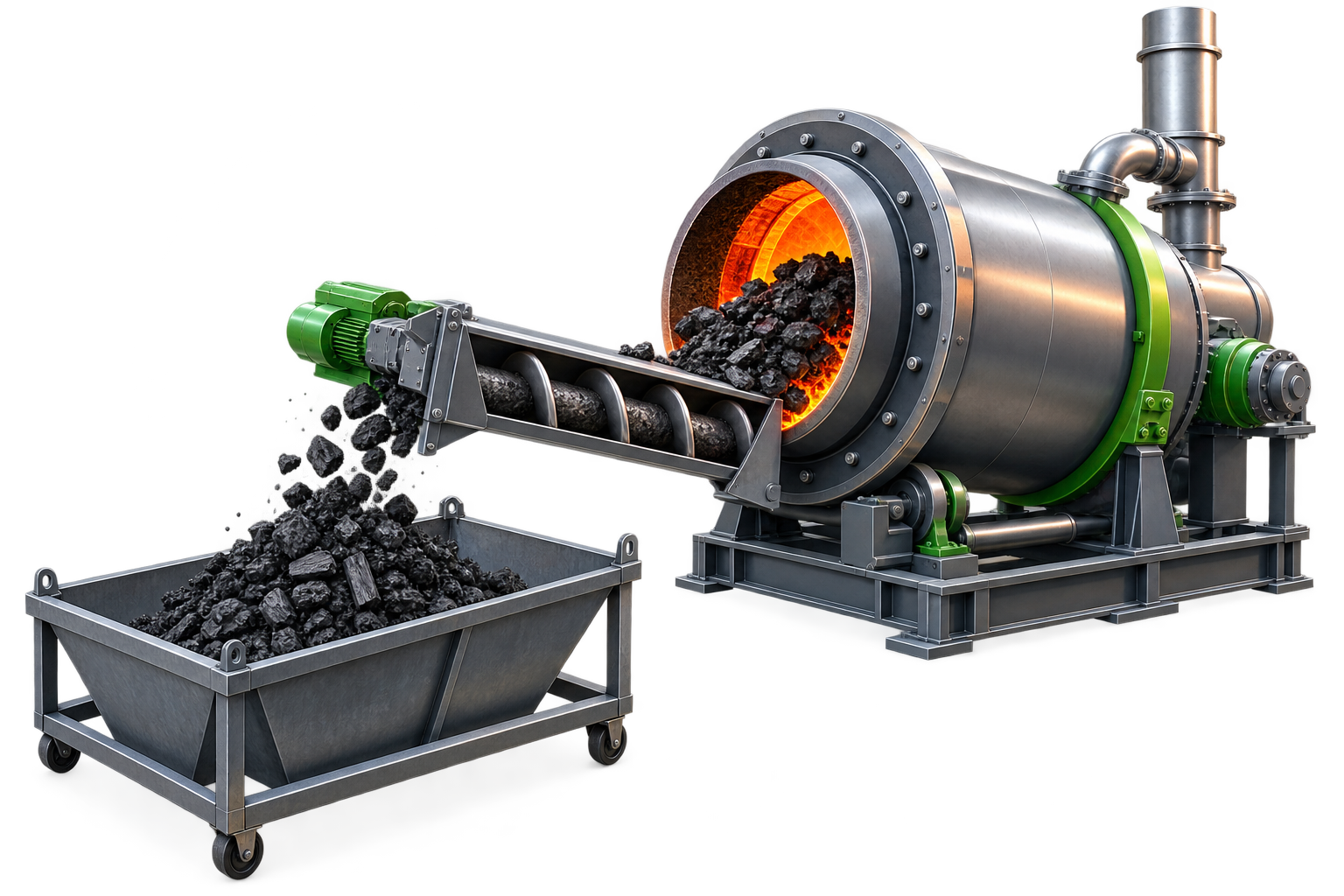
At the end of the process, a solid material known as biochar or carbon black remains and is continuously discharged through a dedicated outlet. This product can be used in various industries, including agriculture, solid fuel production, and activated carbon manufacturing.
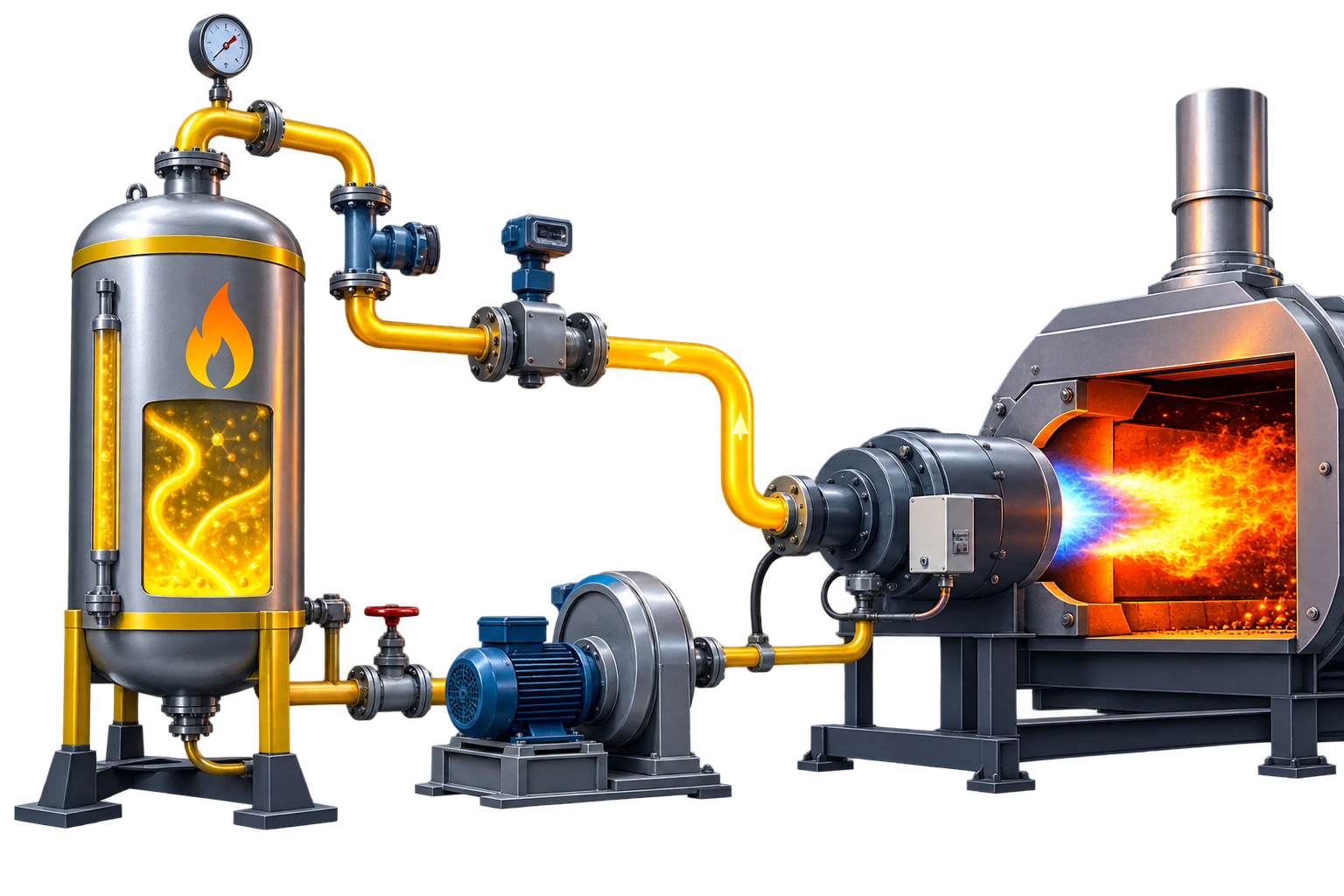
Using Recovered Gas as Fuel
Non-condensable gases such as methane are used in the internal combustion system instead of being wasted. They serve as fuel to provide heat for the reactor, improving energy efficiency and reducing the need for external energy sources.
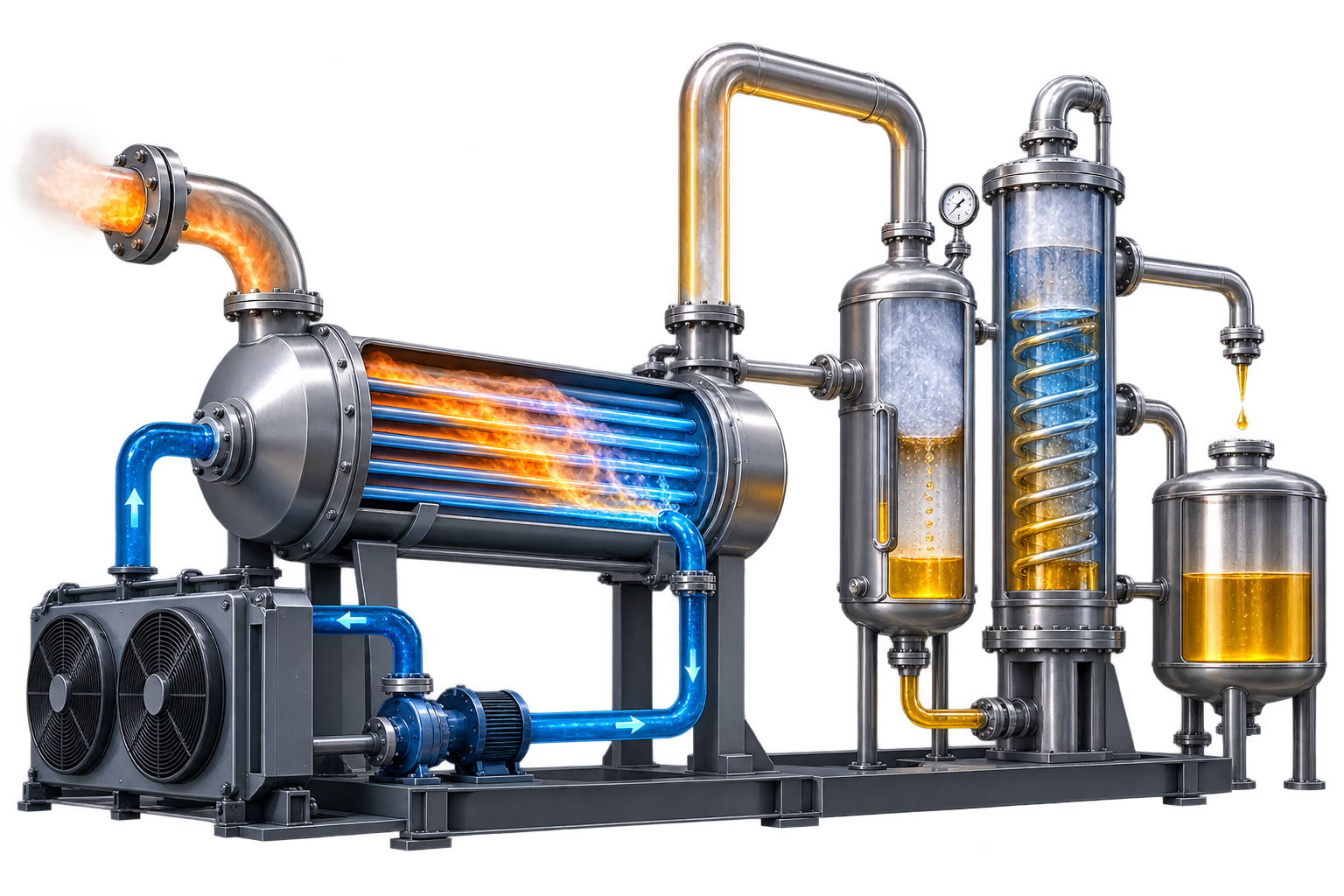
Vapor Cooling and Condensation
The vapors and gases generated in the reactor enter cooling systems and industrial condensers. At this stage, the vapors are cooled and condensed into pyrolysis oil. Non-condensable gases are also separated from the system.
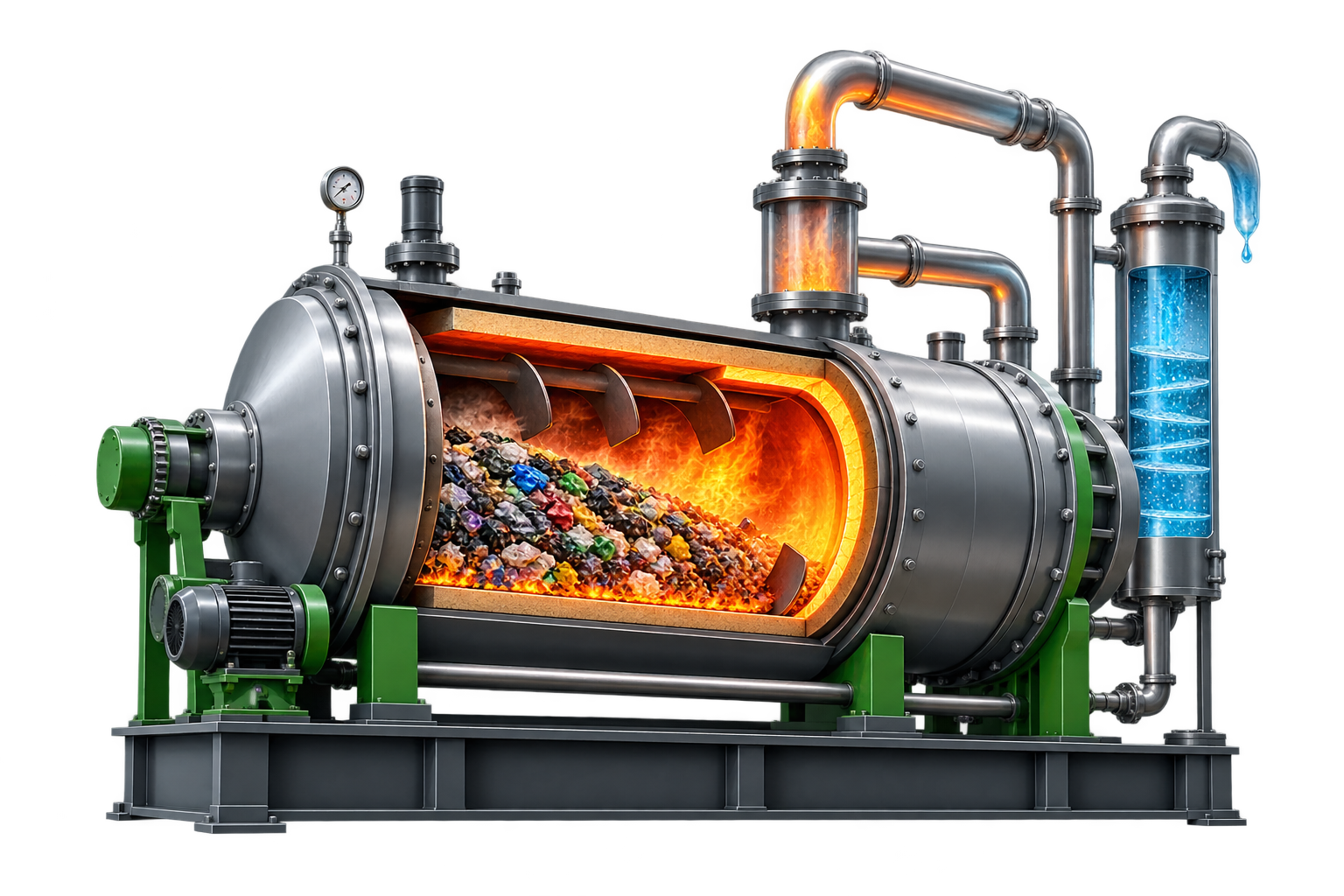
Pyrolysis Process in the Thermal Reactor
In the thermal reactor, the feedstock is decomposed at high temperatures (400–600°C) in an oxygen-free environment. During this process, the molecular structure of the materials breaks down into gases and hydrocarbon vapors
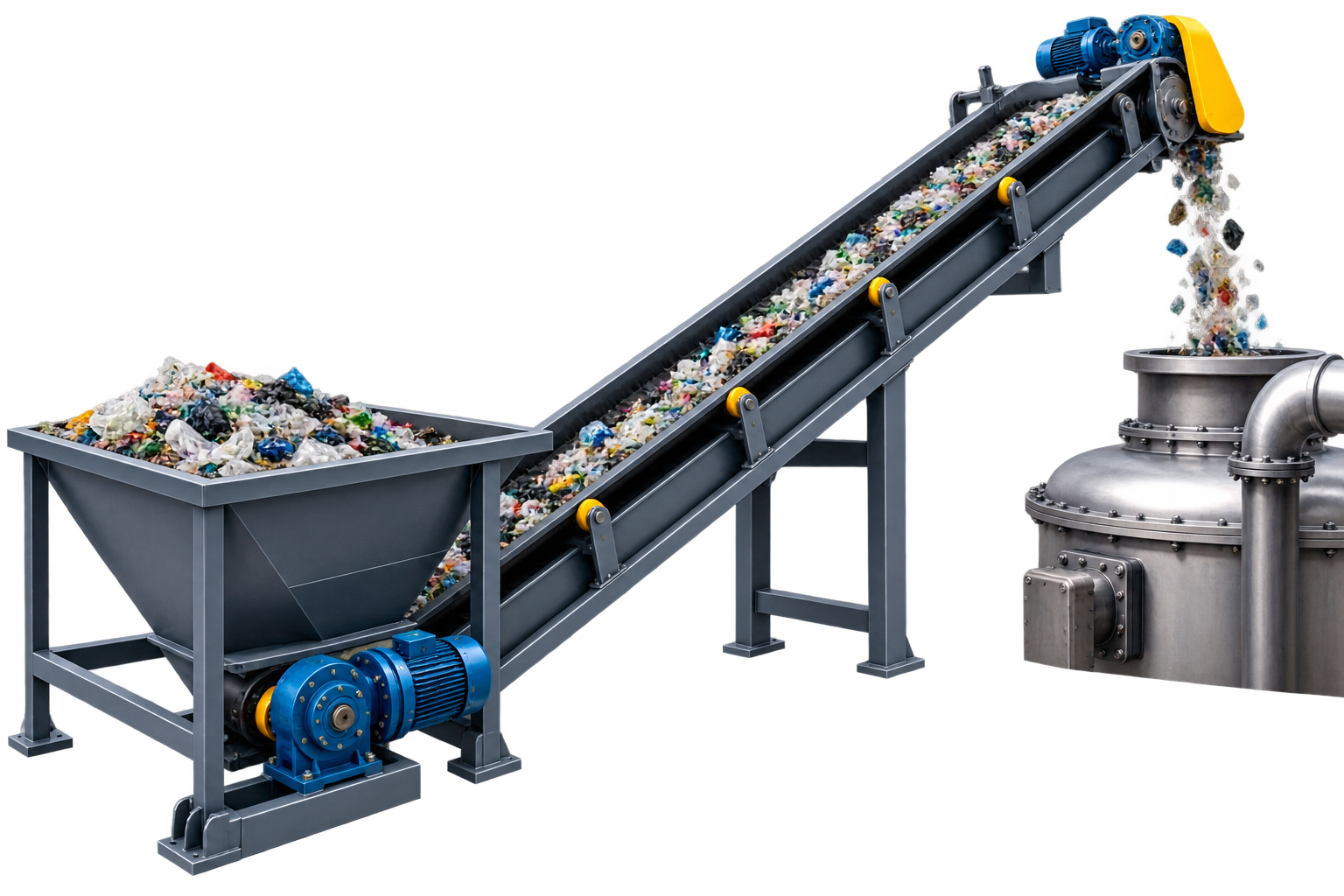
Continuous Feedstock Feeding via Conveyor
Feedstock such as used tires, waste plastics, or biomass is first prepared and then continuously fed into the pyrolysis reactor via an industrial conveyor. This ensures uninterrupted and precise feeding, which is essential for continuous system operation.
021-91303181
info@takvinpolymer.com
Nelson Mandela Street, Golkhaneh Alley, No. 14
Shamsabad Industrial Estate, Boostan Street, Golbon 13 Alley, No. 12
Kerman, Bam, Arg-e Jadid Special Economic Zone, Arg-e Jadid Industrial Estate, Takvin Bam Industrial Complex